

 By Equipo PAT
The classic Inca Trail has a limited daily quota and permits that sell out months in advance. The good news is that it’s not the only way to reach the region on foot — and some alternatives are, frankly, more spectacular.
1. Salkantay — 5 days
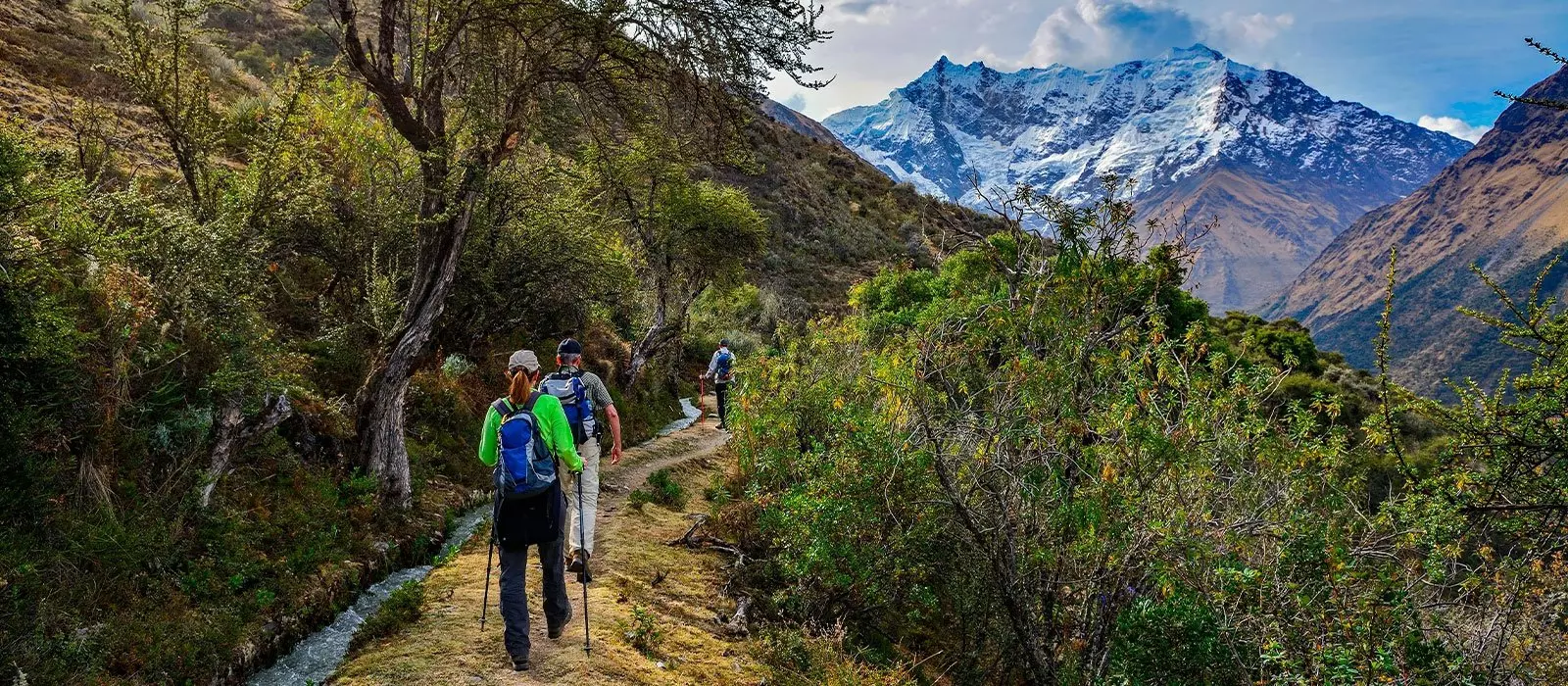
The best known of the alternatives. It circles the Salkantay snow peak crossing a pass at 4,630 m and descends to the edge of the jungle, so in five days you go from puna to cloud forest. Demanding but with no technical sections. No permit required, though booking lodging in high season is wise.
2. Lares — 3 days
The route of the communities. You cross weaver villages where daily life still revolves around the alpaca and the loom. Less hard than Salkantay and the best option if you care more about cultural encounter than elevation gain. It ends with hot springs.
3. Choquequirao — 4 to 5 days
The sister citadel of Machu Picchu, still without road or train: you only get there on foot. The descent and subsequent climb of the Apurímac canyon is genuinely tough. In exchange, you visit an enormous archaeological site practically in solitude.
4. Ausangate — 4 to 5 days
The high-altitude circuit par excellence, around the apu Ausangate, among impossible colored lagoons and herds of alpacas. You always walk above 4,000 m and sleep very high: only with prior acclimatization.
5. Huchuy Qosqo — 2 days
The short option. Two days from Chinchero to a little-visited Inca site with views over the Sacred Valley. Ideal if you have little time or want a warm-up hike before a longer trip.
How to choose
According to the days you have
- 2 days: Huchuy Qosqo. Fits even in a short trip and works as acclimatization.
- 3 days: Lares, if you care about the cultural side; or a trimmed Salkantay.
- 4 days: Ausangate or Choquequirao, both demanding.
- 5 days or more: Full Salkantay to Machu Picchu, the roundest combination of landscape and finale.
When to go
The good window for high-altitude trekking runs from May to September: dry days and very cold nights, with frequent frost above 4,000 m. From November to March it rains almost daily and some passes get muddy or snowy; you can walk, but with proper gear and margin in the itinerary.
April and October are the shoulder months and, in our experience, the best for walking: the green from the rains remains and it no longer rains every day.
What to bring
- Already broken-in boots. Breaking in footwear on a multi-day trek is the fast track to blisters.
- Layers, not one heavy garment. In a single day you go from strong sun to below freezing.
- A sleeping bag rated below freezing if you camp above 4,000 m.
- Sunscreen and lip balm. At that altitude the radiation is far stronger than at sea level.
- Headlamp, trekking poles and a reusable bottle. Poles save your knees on the long descents.
A note on acclimatization
None of these routes should be started right after arriving. All cross 4,000 m at some point and several sleep above it. Two nights in Cusco or the Sacred Valley before leaving is the minimum; three if the trek goes above 4,500 m.
If you want to reach the citadel itself on the original trail, the Inca Trail has no substitute: book ahead and remember it closes all of February. If what you’re after is mountain scenery and fewer people, Salkantay or Ausangate will suit you better. And if you’re traveling with little margin, Lares and Huchuy Qosqo fit into short itineraries without a problem.