

 By Equipo PAT
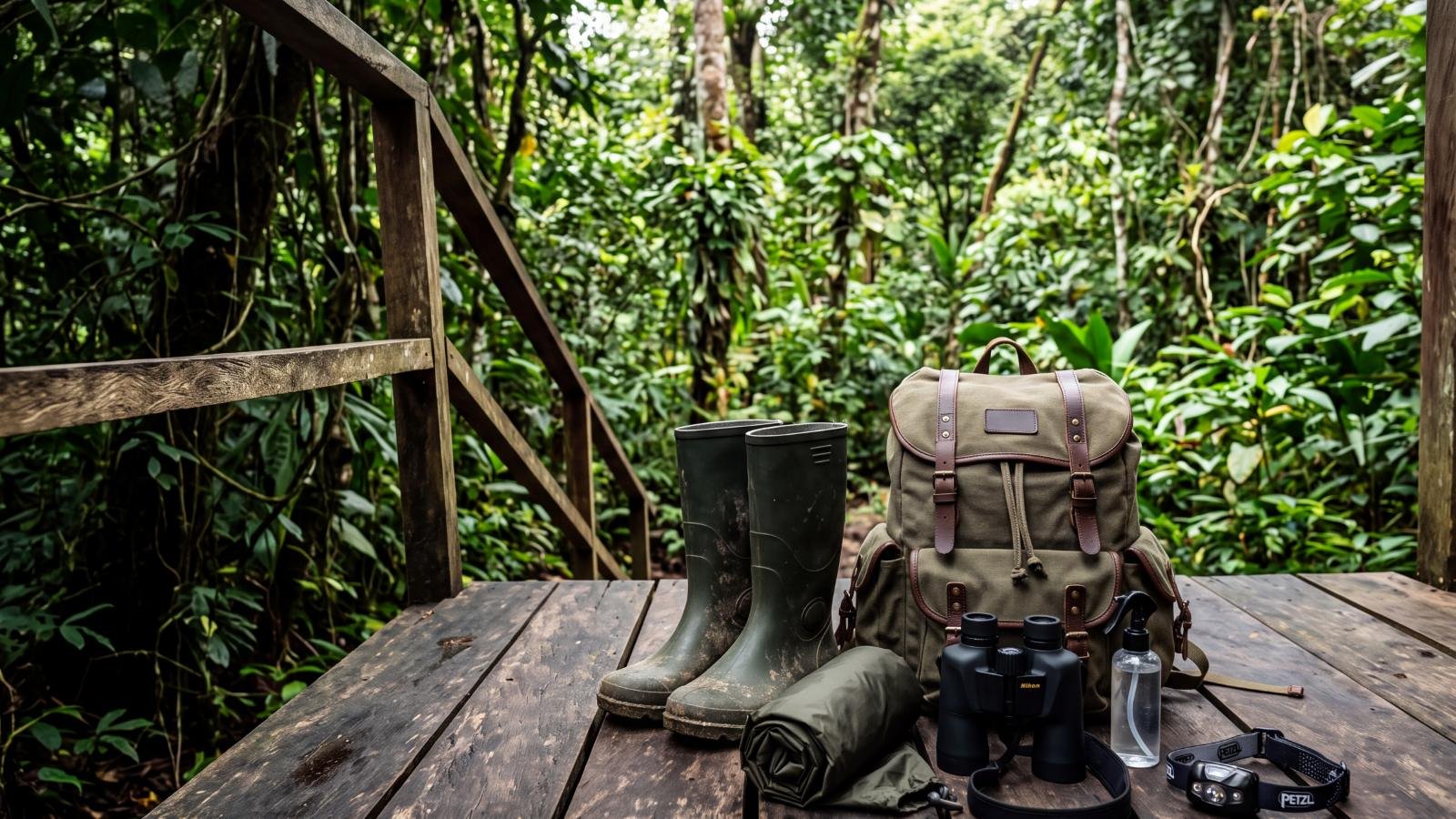
An Amazon packing list for Peru comes down to lightweight long-sleeved clothes, closed shoes, insect repellent, sunscreen, a rain poncho and a flashlight. Humidity is high and the weather changes fast. For that reason, travel with a small backpack. Here is the full list for Tambopata and Manu.
What should you pack in your suitcase for the jungle?
Pack little and choose quick-drying clothes. The lowland jungle is hot and very humid. However, mornings in Manu’s cloud forest are cool. That is why the key is to dress in layers.
This table sums up the essentials and the optional items for a trip of three to five days.
| Item | What it is for | Priority |
|---|---|---|
| Lightweight long-sleeved shirts | Protect you from sun and insects | Essential |
| Quick-dry long pants | Hikes on overgrown trails | Essential |
| Waterproof poncho or jacket | Sudden rain | Essential |
| Insect repellent | Mosquitoes and gnats | Essential |
| Headlamp | Night walks and lodges without constant power | Essential |
| Binoculars | Distant birds and mammals | Recommended |
| Dry bags | Protect your camera and documents from humidity | Recommended |
| Wide-brimmed hat | Sun on the boat | Recommended |
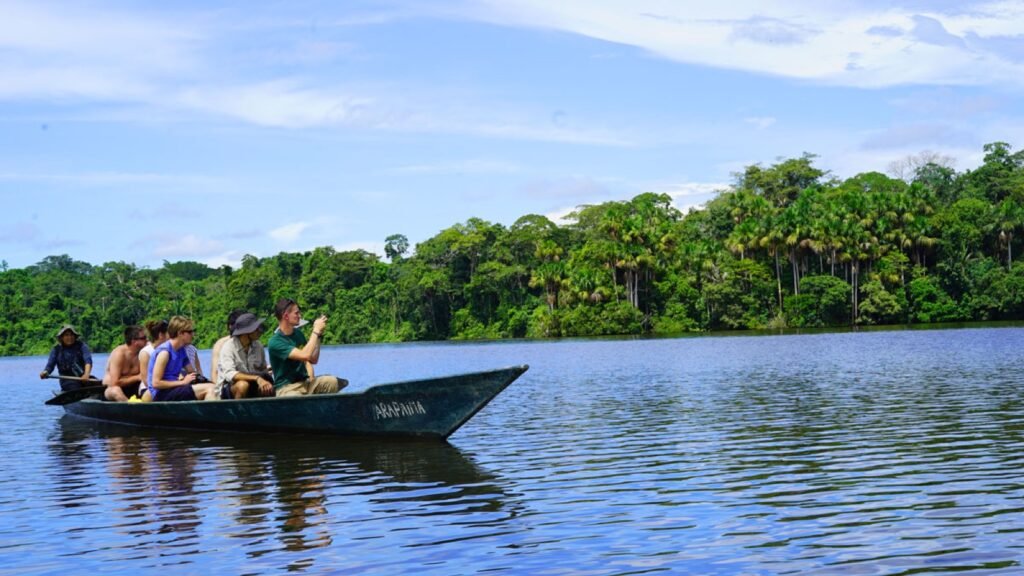
What clothes should you bring to the Peruvian jungle?
Choose neutral colors such as beige, green or gray. Bright colors and dark tones scare birds and attract more insects. In addition, long sleeves protect you better than repellent alone.
- 2 or 3 lightweight long-sleeved shirts.
- 2 pairs of quick-dry long pants.
- 1 pair of shorts or swim trunks for the river.
- Long socks, so you can tuck your pants in.
- 1 thin fleece for cool mornings.
Avoid thick cotton and jeans. They take a long time to dry and feel heavy when wet.
What footwear do you need in the jungle?
You need comfortable closed boots for the mud and light footwear for the lodge. On the Tambopata 3 days program, rubber boots are included, so you do not have to buy them. Always ask whether your tour provides them and in what sizes.
On the other hand, bring sandals or light sneakers for downtime. That way you let wet shoes dry. In addition, open sandals help when you step off the boat.
How do you protect yourself from sun, rain and insects?
The jungle can fool you: a cloudy sky does not prevent sunburn. For that reason, use high-SPF sunscreen and sunglasses. Then apply repellent every few hours, especially at dusk. Bed nets help, but they do not replace repellent.
Rain can arrive without warning. A light poncho weighs little and takes up less space than an umbrella. In addition, keep your sleepwear in a dry bag so it always stays dry.
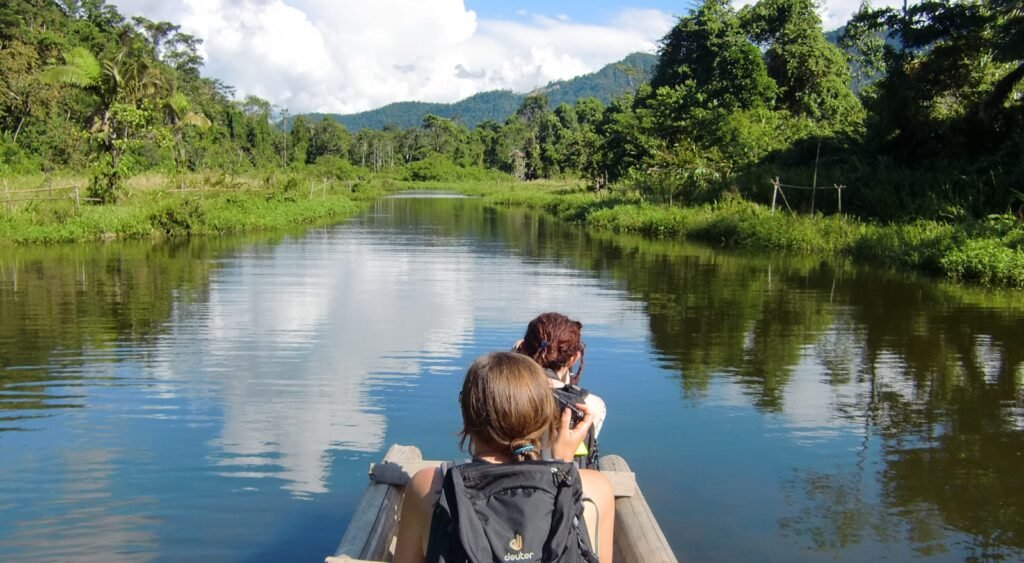
What documents and health precautions do you need?
Bring your original passport or ID, your printed booking and some cash in soles. Lodges do not always have ATMs or internet. On the other hand, flights to Puerto Maldonado require ID, so do not keep it in your checked bag.
As for vaccines, yellow fever is the one most often recommended for jungle travel. Talk to your doctor several weeks ahead. You can check the official information on the Peruvian Ministry of Health website and at the WHO.
Also bring a personal first-aid kit: pain relievers, antihistamines, bandages and your usual medicines.
What extra gear is worth bringing?
Some things are not mandatory, but they improve the experience a lot:
- Binoculars: a must if you want a good look at the clay lick birds.
- Headlamp: better than a handheld flashlight, because it leaves your hands free.
- Power bank: lodge electricity can be limited.
- Camera with zoom and a waterproof pouch: humidity damages equipment.
- Lightweight sleeping bag: optional on routes with camping, such as Tambopata 5 days.
Does the list change with the season?
A little. From May to October it rains less, but nights can be cool, especially in Manu. For that reason, add a warm layer. By contrast, from November to March it rains more. So reinforce the poncho, the dry bags and an extra change of dry clothes. In addition, there are more insects in the wet season, so bring more repellent.
What should you not bring to the jungle?
Leave jewelry, strong perfumes and loud-colored clothing at home. Strong smells attract insects. Do not overpack either. On the boat and on the trails you only need a small backpack with the day’s essentials.
If your route starts in Cusco, ask when you book whether you can leave your large suitcase at your hotel. That way you travel lighter. To see what the overland route is like, read Manu tour from Cusco: how to get there and how many days.
What should you pack for your specific route?
This list works for any program, but each route has its nuances. In Tambopata’s lowland jungle you need more protection from heat and insects. In Manu, on the other hand, add a warm jacket for the first day, which crosses 4,000 m. To prepare for the birds, see the guide to the macaw clay lick. And if you are torn between both destinations, compare them in Manu or Tambopata.
Frequently asked questions
What clothes are recommended for the Peruvian jungle?
Lightweight long-sleeved tops, quick-dry long pants and neutral colors. Add a thin fleece if you pass through Manu’s cloud forest.
Do I need to buy rubber boots?
It depends on the tour. On Tambopata 3 days, rubber boots are included. Always confirm what your program offers before you travel.
Which insect repellent is best for the jungle?
Choose one made for tropical use and apply it every few hours, especially at dusk. Combine it with long sleeves, because clothing protects more than repellent alone.
Do I need a yellow fever vaccine?
It is usually recommended for jungle travel. Talk to your doctor weeks ahead and check the information from Peru’s Ministry of Health.
Is there phone signal and internet at the lodge?
Usually it is very limited or nonexistent. Download your maps and documents before you leave and let your family know you will be offline.