

 By Equipo PAT
Manu vs Tambopata comes down to time and access. Pick Manu if you want a remote rainforest with cloud forest and huge biodiversity, and you can spare days for the overland road. Pick Tambopata if you would rather fly to Puerto Maldonado and see macaws, lakes and comfortable lodges in just a few days. Both are excellent, but they feel very different.
What is the main difference between Manu and Tambopata?
The key difference is access. You reach Manu from Cusco by road, dropping from the Andes down to the jungle. You reach Tambopata on a short flight from Cusco to Puerto Maldonado, then a boat ride to your lodge. For that reason, Manu needs more days, while Tambopata suits you better if you are short on time.
The scenery also changes. In Manu you go from the high plateau to cloud forest and then to the Amazon plain. Tambopata, on the other hand, is mostly lowland rainforest at about 500 m (1,640 ft), with rivers and oxbow lakes.
What does Manu offer?
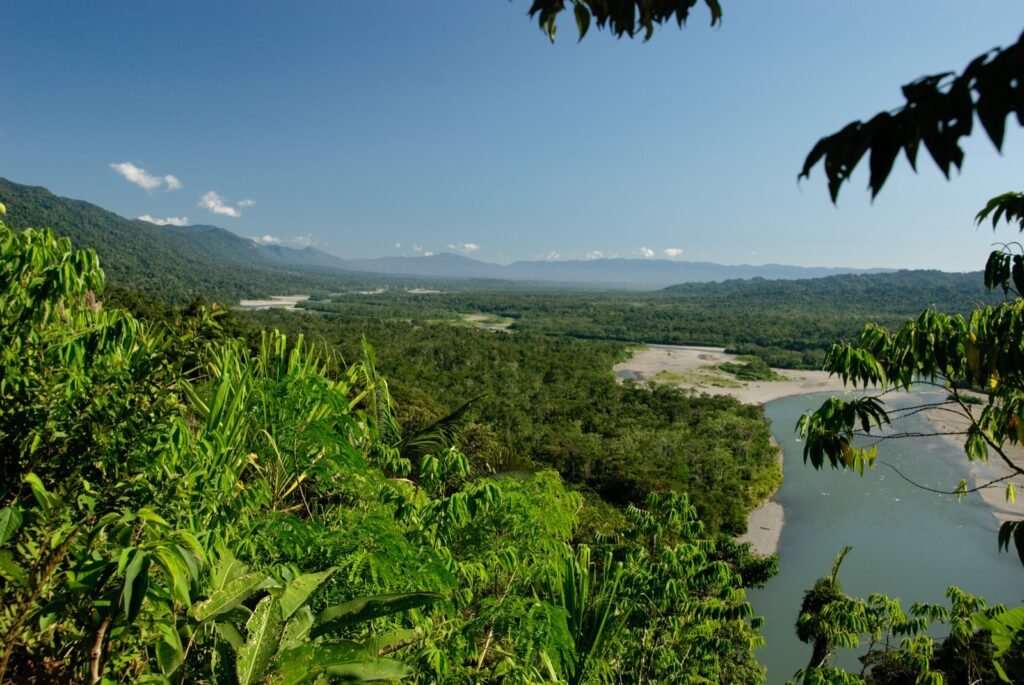
Manu National Park is one of the most biodiverse protected areas on the planet, and UNESCO has named it a World Heritage Site. Our route covers the Cultural Zone, the part open to visitors. The rest is tightly restricted to protect the forest.
First you descend through cloud forest, home of the Andean cock-of-the-rock. Then you float down the Alto Madre de Dios River and visit lakes and parrot clay licks. In addition, the five-day route reaches Salvador Lake, where giant otters live, and includes one night of camping. The road also climbs to about 4,000 m (13,100 ft), so it helps to read up on how to acclimatize to altitude first.
What does Tambopata offer?
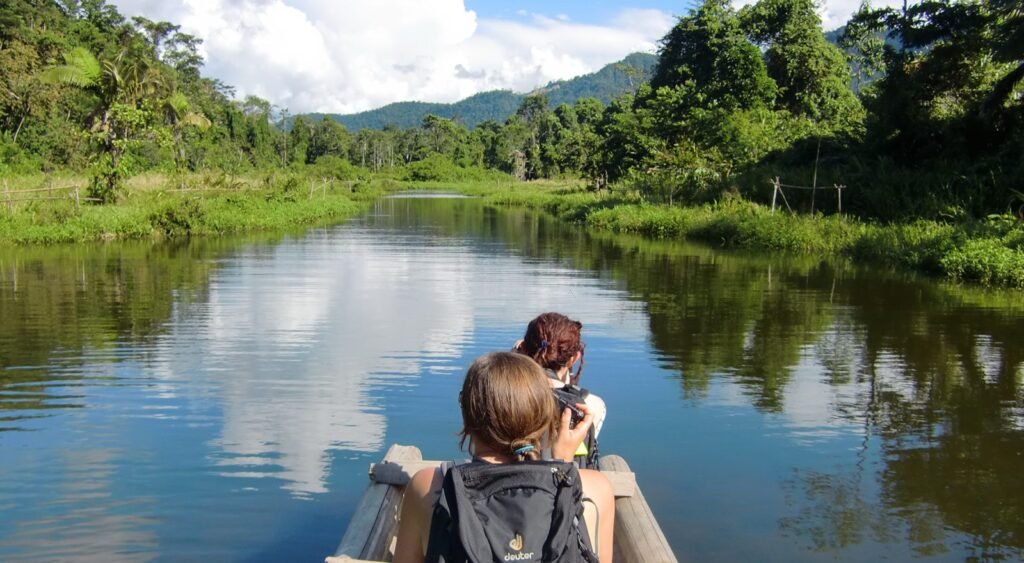
Tambopata National Reserve sits next to Puerto Maldonado, in Peru’s southern rainforest. It is easier to reach and designed for short stays. It is also famous for its clay licks, where hundreds of macaws gather to eat clay, and for Sandoval Lake.
During your visit you hike through the forest, go on night safaris to spot caimans, and take boat trips. On the five-day route you also camp one night and kayak the Tambopata River. So it is a very complete option if you want birds, rivers and wildlife without much logistics.
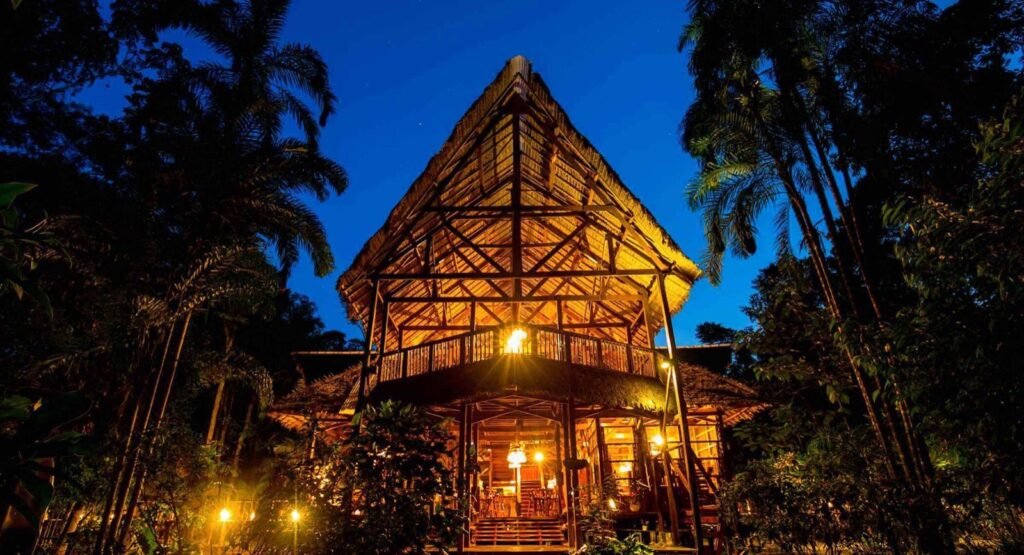
Manu vs Tambopata: which has more wildlife?
Both have enormous wildlife, so it depends on what you want to see. Manu stands out for its variety of habitats, which adds up to many species of birds, mammals and plants. Tambopata stands out for its macaw clay licks and the giant otters of Sandoval Lake.
However, keep your expectations realistic. Big cats such as the jaguar are very hard to spot in any rainforest, and no guide can promise one. On the other hand, birds, monkeys and caimans are seen fairly often in both reserves.

How much do Manu and Tambopata tours cost, and how long do they last?
This table sums up our routes. The prices are for our trips from Cusco.
| Route | Length | Altitude | From |
|---|---|---|---|
| Manu Cultural Zone | 3 days, 2 nights | 4,000 m | $329 |
| Manu Cultural Zone | 4 days, 3 nights | 4,000 m | $389 |
| Manu Cultural Zone | 5 days, 4 nights | 4,000 m | $599 |
| Tambopata | 3 days, 2 nights | 500 m | $449 |
| Tambopata and Macaw Clay Lick | 4 days, 3 nights | 500 m | $529 |
| Tambopata | 5 days, 4 nights | 500 m | $799 |
Note one important detail. Our Tambopata tours do not include the flights from Cusco to Puerto Maldonado and back, so add them to your budget. By contrast, the Manu route covers the trip overland with tourist transport.
What does each route include?
The Manu 3 days and 2 nights trip includes meals, lodge accommodation, tourist transport, a boat and a professional guide. In addition, Tambopata 3 days and 2 nights includes airport transfers, meals, bungalow accommodation, guided excursions and rubber boots.
If you want the full expedition, take a look at Manu 5 days and 4 nights or Tambopata 5 days and 4 nights. Both add a night of camping deep in the jungle.
What is the trip like in each jungle?
In Manu, the first day is long and mostly spent on the road. However, that drive is part of the experience: the landscape shifts from the Andes to cloud forest. After that, the routine turns simple. You wake early for birdwatching, travel by boat and sleep in lodges surrounded by jungle.
In Tambopata, the pace is more compact. First you fly to Puerto Maldonado, and then a boat takes you to the lodge. Activities are also spread between morning and night. For example, you hike at dawn and, after dinner, head out with a flashlight to look for caimans.
The weather is hot and humid in both places. For that reason, pack quick-drying clothes. In addition, lodges on both routes have basic services and limited electricity. So bring a power bank and do not count on phone signal.
Which one suits your time and travel style?
- You have 3 days or less: choose Tambopata, thanks to the short flight.
- You have 5 days or more: choose Manu, to see more habitats.
- You travel with kids or older adults: choose Tambopata, for the low altitude and easy access.
- You want adventure and changing scenery: choose Manu, even though the road is long.
- You want macaws: choose Tambopata, for its famous clay lick.
So, in short, Tambopata is faster and more comfortable. Manu, by contrast, is more remote and more varied. For example, if you have already climbed to Machu Picchu and want a change of scene, either one works very well.
When is the best time to visit the jungle?
The dry season, from May to October, is the most comfortable: there is less rain and the roads are in better shape. However, you can visit the rainforest all year. On the other hand, from November to March it rains more, so mud and humidity rise. Always bring insect repellent, lightweight long-sleeved clothing and a rain poncho.
For more details on each destination, see the official PromPerú pages for Manu National Park and Tambopata National Reserve. And if you are still planning the whole trip, read our guide to places to visit in Peru.
Tips before you book your jungle trip
- Book early in the dry season, because lodges have few beds.
- Always ask what the price includes, especially flights and entrance fees.
- Bring DEET repellent, a headlamp and closed shoes.
- Talk to your doctor about the yellow fever vaccine before you travel.
Frequently asked questions
Which is better, Manu or Tambopata?
It depends on your time. Tambopata is faster and more comfortable, with a short flight from Cusco. Manu is more remote and varied, but it needs more days on the road.
How many days do I need for Manu?
Our Manu routes last 3, 4 or 5 days. Three days covers the essentials; with five you reach Salvador Lake and camp for one night.
Can you see jaguars in Manu or Tambopata?
It is very rare in both. No guide can promise it. Birds, monkeys, caimans and giant otters are the usual sightings, depending on your route.
Do the Tambopata tours include the flight?
No. Our Tambopata tours do not include the Cusco – Puerto Maldonado – Cusco flights, so you need to add them to your budget.
How much does a Manu or Tambopata trip cost?
Manu starts from $329 (3 days) and Tambopata from $449 (3 days). The five-day routes start from $599 and $799, respectively.